REPRESENTATIVE STUDY · Research & development
Screening reaction pathways with density functional theory
Using DFT to compare competing reaction pathways and rank candidate molecules by activation energy before committing laboratory time.
A research group has a family of candidate molecules and two plausible mechanisms for the reaction they care about. Synthesising and testing every candidate would take months. Computation can narrow the field first.
The question
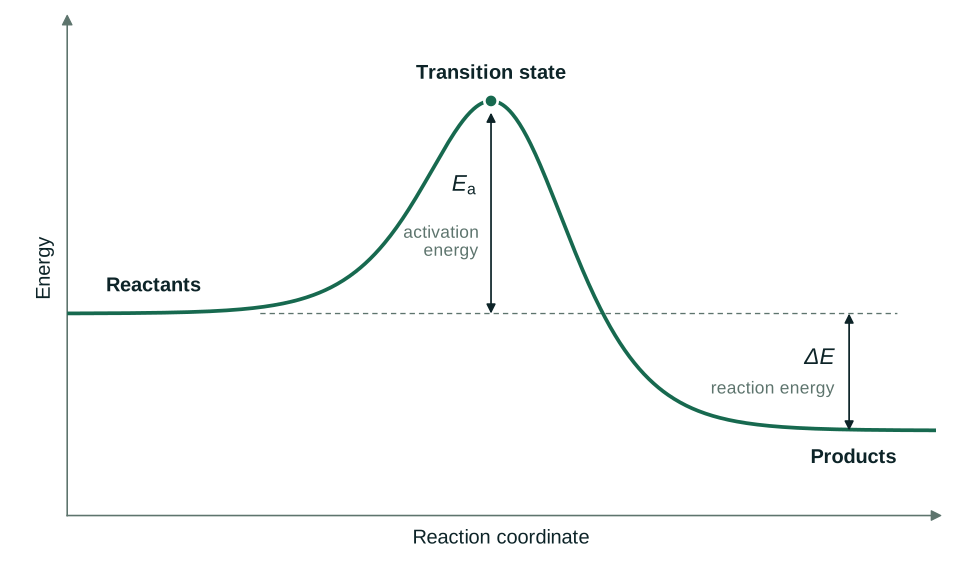
Which mechanism is energetically favoured, and which candidates lower the barrier of the rate-limiting step? The group needs relative energies they can trust enough to prioritise experiments, with a clear statement of how much the method itself could be in error.
The approach
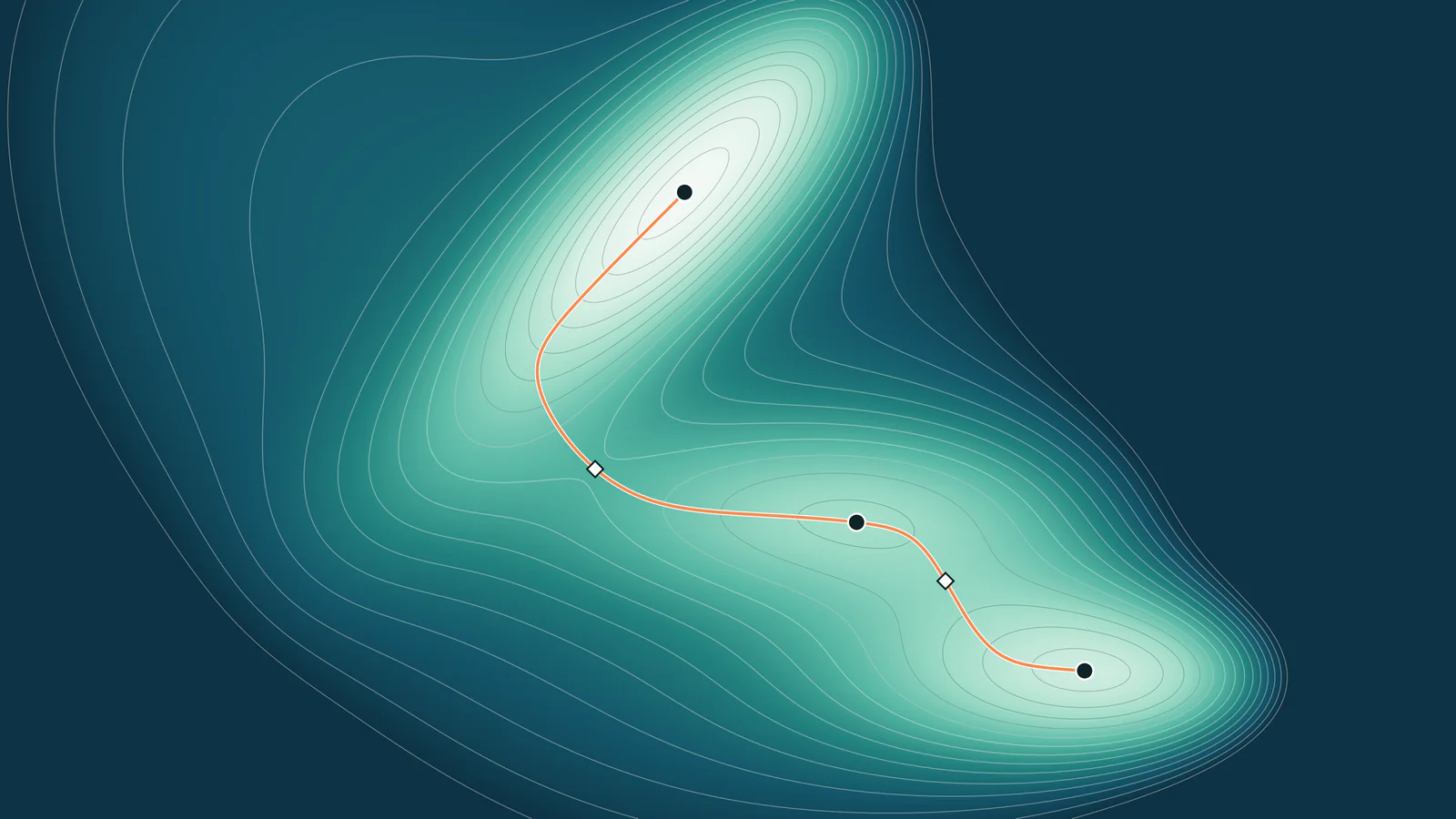
Reactants, intermediates and products are optimised with density functional theory, and each transition state is located and confirmed by a frequency calculation: one imaginary frequency, along the bond being made or broken. Following the path downhill from each transition state confirms that it connects the intended minima.
The functional and basis set are not chosen on habit. A small subset of the system is recomputed with a higher-level method, and the DFT setup that reproduces it best is used for the full screen. Our article on choosing a functional and basis set covers the reasoning.
What the study delivers
- Optimised geometries for every stationary point, as coordinate files
- Energy profiles for both mechanisms and each candidate
- A ranking of candidates by barrier height, with the benchmark error alongside
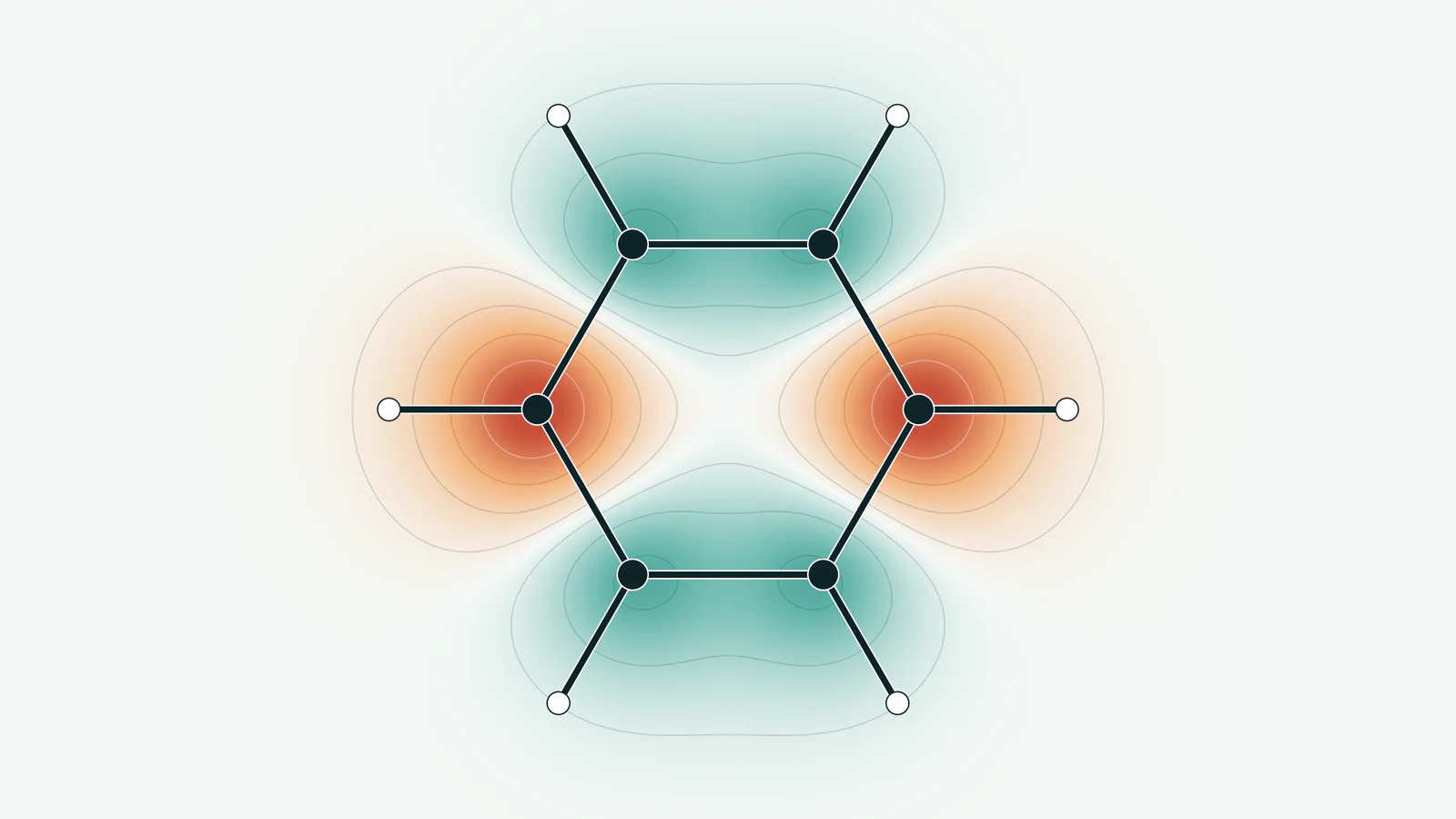
- Electronic-structure analysis that explains the trend, not just reports it
Why it matters
A change of a few kilojoules per mole in a barrier changes a rate severalfold. Screening by computation means laboratory effort goes to the two or three candidates most likely to work, and the mechanism is understood well enough to design the next generation.
About this study. This is a representative example of how we approach this type of problem, shown with computed illustrative imagery. It is not a report on a specific client engagement.