CFDpro.

Services

Simulation services,
from first question to verified answer.

Eight areas of expertise, one way of working: understand the physics, choose the right model, verify the numbers and explain what they mean for your design.

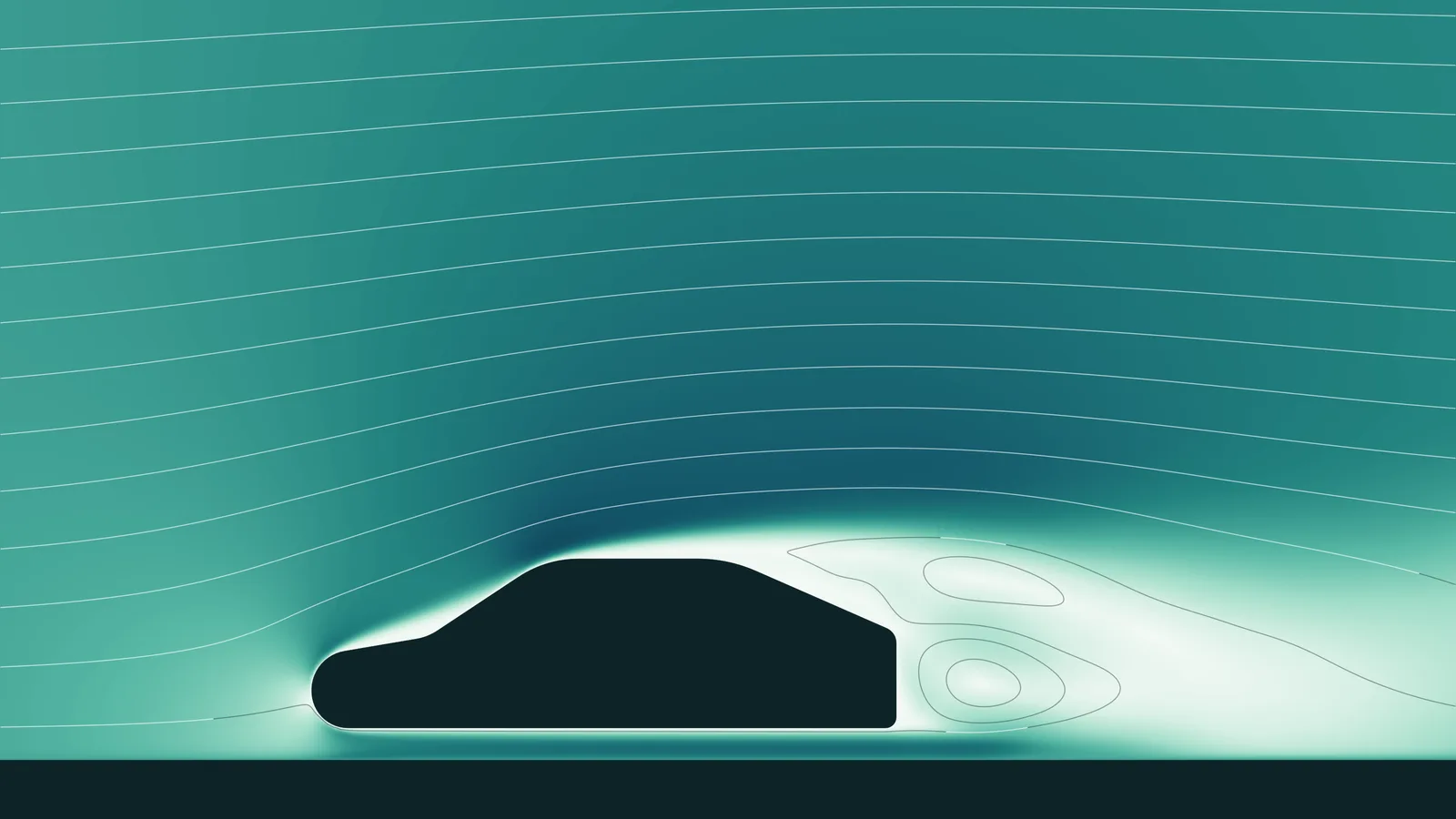
Velocity field and streamlines around a simplified vehicle body near the ground, with a separated wake behind it
Bluff-body wake · Illustrative

01 / External aerodynamics

Lift, drag and everything in the wake.

Forces and moments are only the headline. We resolve the pressure distribution, separation and wake structure behind them, so you know why a shape performs the way it does and what to change.

Questions we answer

  • What are the lift, drag and moment coefficients across the operating envelope?
  • Where does the flow separate, and how sensitive is it to incidence or yaw?
  • How do design variants compare under identical conditions?

Methods

  • Steady & unsteady RANS
  • DES & LES
  • Compressible flow
  • Boundary-layer meshing
  • Force & moment breakdown
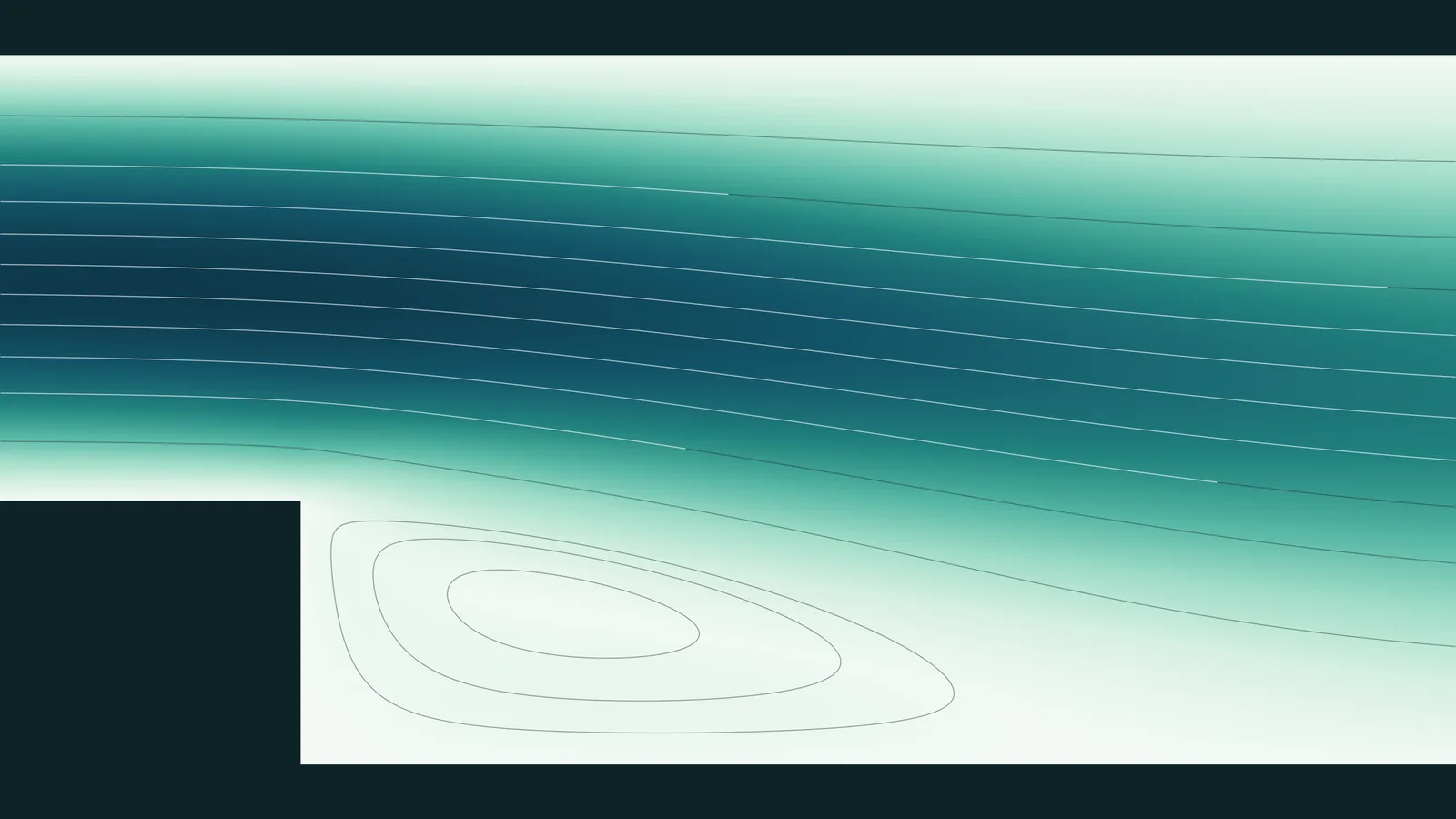
Velocity field and streamlines over a backward-facing step, showing a recirculation zone behind the step
Separation behind a step · Illustrative

02 / Internal flows

Pressure drop, distribution and what happens around the bend.

Pipes, ducts, manifolds and valves rarely behave like the textbook correlation. We show where pressure is lost, how flow splits between branches and where recirculation or dead zones form.

Questions we answer

  • What is the pressure drop, and where exactly is it lost?
  • Is flow evenly distributed between branches, passes or outlets?
  • Will a baffle, vane or geometry change fix it?

Methods

  • Steady RANS
  • Transient analysis
  • Porous-media models
  • Loss-coefficient extraction
  • Parametric geometry studies
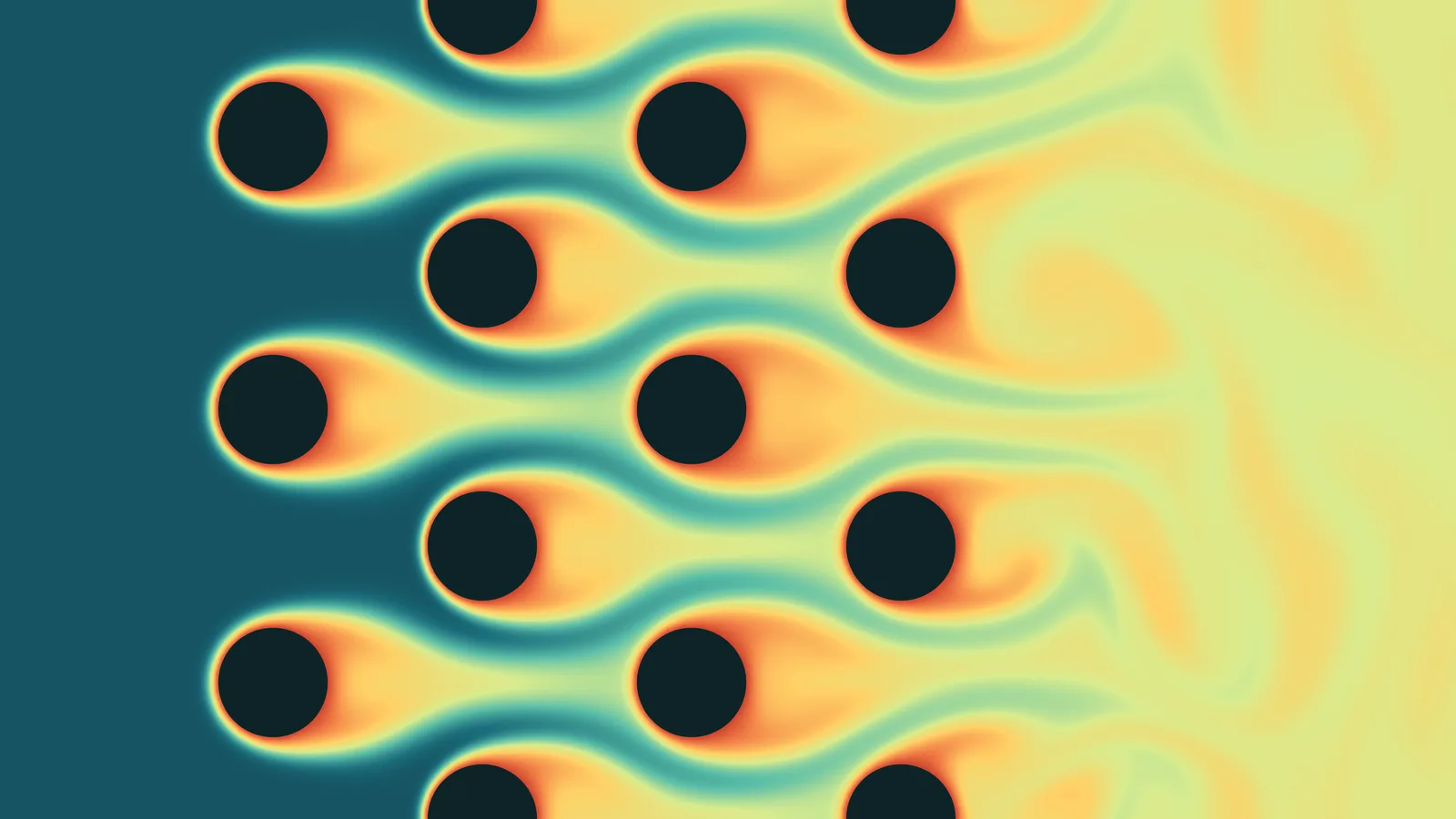
Temperature field in cross-flow over a staggered bank of hot tubes
Cross-flow over a tube bank · Illustrative

03 / Heat transfer & thermal management

Every temperature field tells a story.

Heat moves through fluids and solids together. We couple them with conjugate heat transfer to find hot spots, size cooling and show how much margin a design has at its worst-case condition.

Questions we answer

  • Where are the hot spots, and what are the peak temperatures?
  • Is natural convection enough, or does the design need forced cooling?
  • What duty and pressure drop will the heat exchanger deliver?

Methods

  • Conjugate heat transfer
  • Natural & forced convection
  • Radiation
  • Transient thermal
  • Electronics cooling
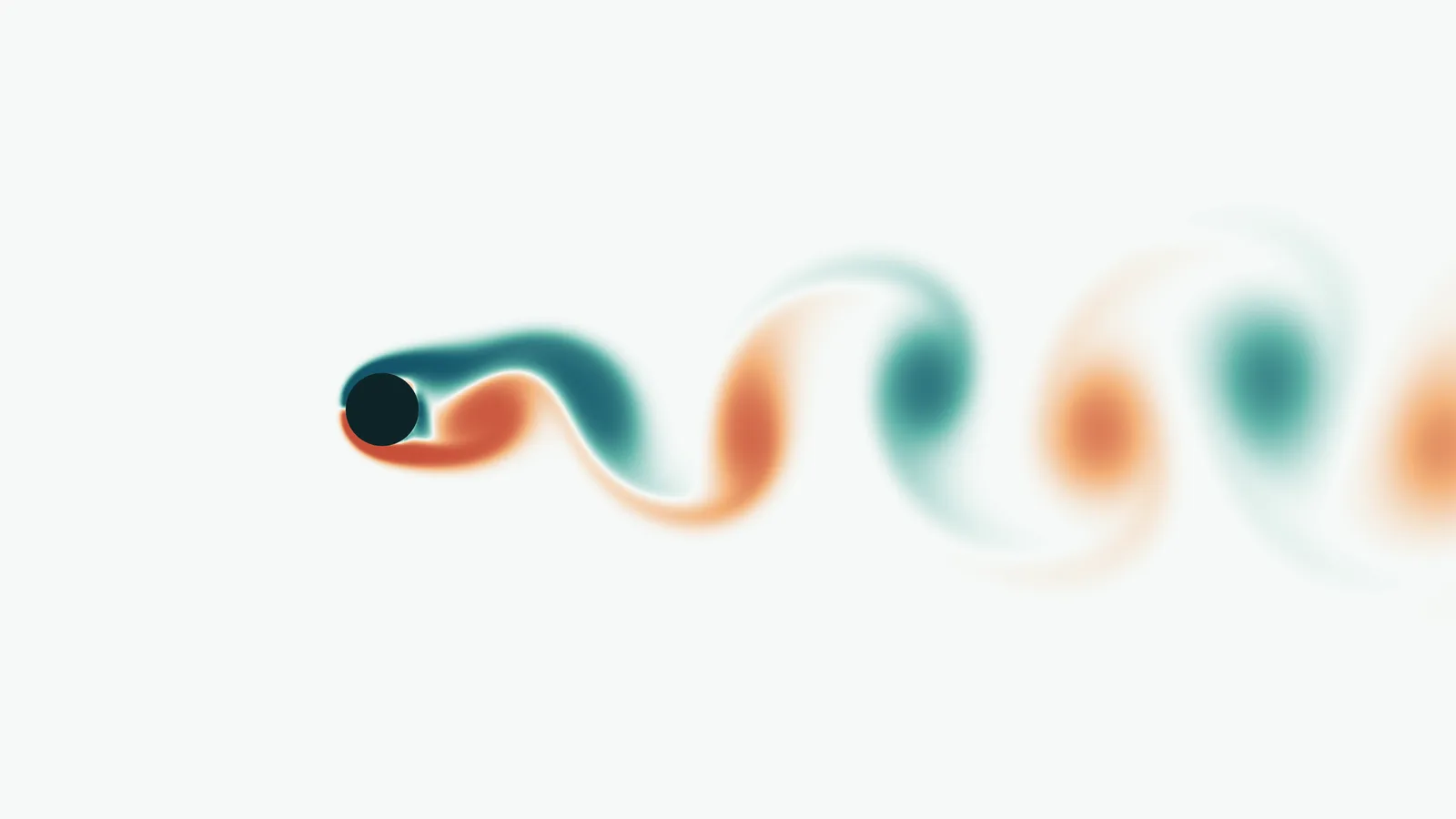
Vorticity contours behind a circular cylinder showing an alternating vortex street
Vortex shedding · Illustrative

04 / Turbulent & unsteady flows

The right turbulence model for the question.

A steady RANS run answers many questions quickly; others need the unsteady structures resolved. We choose between RANS, hybrid and scale-resolving approaches on what the decision demands, not on habit. How we choose

Questions we answer

  • Does the flow shed vortices, and at what frequency?
  • What are the mean and fluctuating loads?
  • Is RANS sufficient here, or is a scale-resolving run justified?

Methods

  • k-ε & k-ω SST
  • Spalart–Allmaras
  • DES & DDES
  • LES
  • Spectral analysis
Tracer particle paths carried through an unsteady wake
Particle tracking · Illustrative

05 / Multiphase & moving systems

Multiple phases. Connected behaviour.

Interacting fluids, dispersed particles and moving components change the problem. We pick the multiphase and mesh-motion approach that fits your application and the level of detail you need.

Questions we answer

  • Where does the free surface go during filling, draining or sloshing?
  • Where do particles or droplets travel, separate and deposit?
  • How does a rotating component perform across its speed range?

Methods

  • Volume of fluid
  • Eulerian multiphase
  • Particle tracking
  • Rotating & moving meshes
  • Fluid–structure interaction
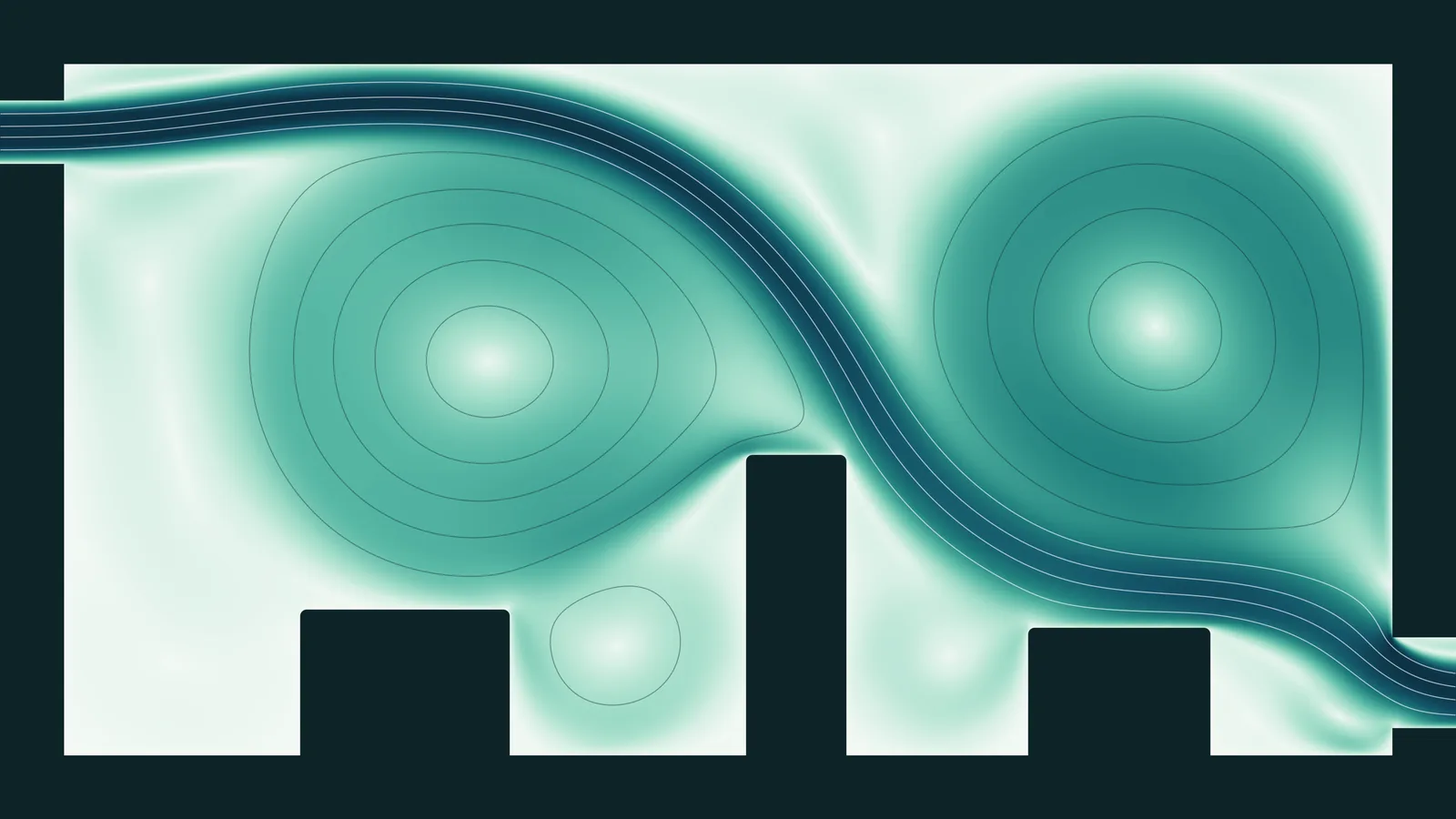
Air speed and streamlines in a ventilated room in side view: a high-level supply jet crosses the room to a low exhaust, leaving two large recirculation cells around three floor-standing blocks
Room air distribution · Illustrative

06 / HVAC & ventilation

Air where you need it.

Supply and extract positions, heat loads and buoyancy decide whether a room is comfortable, a cleanroom stays clean or an enclosure stays cool. We model the air path before anything is built.

Questions we answer

  • Does supply air reach the occupied or critical zone?
  • Are temperature and air speed within comfort or process limits?
  • How quickly are heat and contaminants removed?

Methods

  • Buoyancy-driven flow
  • Species transport
  • Age-of-air analysis
  • Diffuser modelling
  • Transient studies
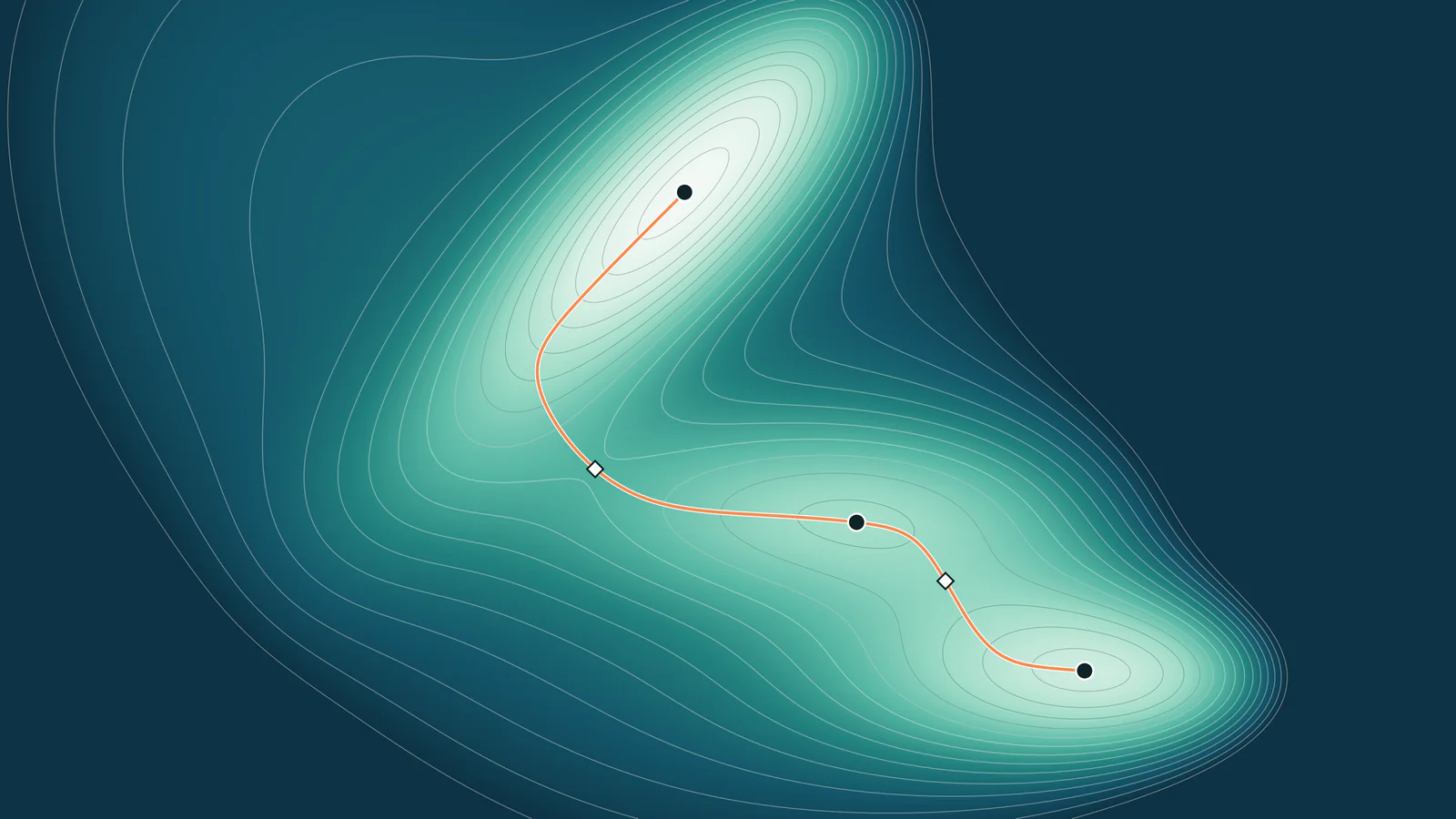
Contours of a model potential-energy surface with the minimum-energy path joining its three minima through two saddle points
Potential-energy surface · Illustrative

07 / Computational quantum chemistry

Small interactions. Fundamental insights.

When the answer lies in how molecules behave, we use density functional theory and molecular modelling to compute structures, energies and pathways, with the method chosen around your research question. Choosing a functional

Questions we answer

  • What is the stable geometry of this molecule or complex?
  • How strongly do two species interact or bind?
  • What is the energy barrier of a reaction step?

Methods

  • Density functional theory
  • Geometry optimisation
  • Electronic structure
  • Potential-energy scans
  • Molecular interactions
A structured body-fitted mesh around an aerofoil with fine cells near the surface
Body-fitted mesh · Illustrative

08 / Simulation support

Stuck? Send us the case.

Not every project needs outsourcing end to end. If a case will not mesh, converge or agree with experiment, send it as a solving request: we diagnose the setup, fix what is wrong and explain what we changed. Send a solving request

Typical requests

  • A solver that diverges or stalls
  • A mesh that fails quality checks
  • Results that disagree with test data

What you get

  • Root-cause diagnosis
  • Corrected setup
  • Mesh recommendations
  • Best-practice notes

Methods at a glance

The modelling toolbox.

We select and tailor models to the physics, accuracy and computational needs of each project. This is the range we draw from.

TurbulenceLaminar and transitional flow; RANS closures including k-ε, k-ω SST and Spalart–Allmaras; hybrid DES and DDES; large-eddy simulation.
Heat transferConduction, natural and forced convection, conjugate heat transfer between fluids and solids, and radiation.
MultiphaseVolume of fluid for free surfaces, Eulerian multiphase for dispersed phases and Lagrangian particle tracking.
MotionRotating reference frames, rotating and moving meshes, and fluid–structure interaction.
Flow regimeIncompressible and compressible, steady and transient.
Quantum chemistryDensity functional theory, geometry optimisation, electronic structure, potential-energy scans and molecular interaction energies.
VerificationMesh-independence studies and the Grid Convergence Index, residual and monitor convergence, model sensitivity and validation against data. How we verify
ComputeCloud HPC through our tie-ups with Oracle Cloud Infrastructure, IBM Cloud, AWS, Google Cloud and Microsoft Azure, and connections to the IndiaAI compute programme and the National Supercomputing Mission. HPC & compute

Deliverables

What lands on your desk.

Agreed in the proposal and shaped around how your team will use the results.

01

Technical report

Problem statement, modelling approach, mesh and convergence evidence, results and their interpretation.

02

Visualisations

Contours, streamlines, plots and animations that make the flow or temperature field easy to explain to others.

03

Data & recommendations

Processed data for your own analysis, plus practical recommendations on what to change and what to test next.

LET’S SOLVE SOMETHING

What’s your next
engineering challenge?

Tell us what you’re working on. A few minutes on the project brief gives us what we need to reply with an approach, a scope and a quote.

OR GIVE US A CALL+91 73990 03366Tamil Nadu, India